
Quick Answer (BLUF): When comparing an inverter generator vs. generator (conventional open-frame) and modern LiFePO4 portable power stations, the right choice comes down to indoor safety, noise, and power quality. Conventional generators deliver raw high wattage (5,000W+) but produce dangerous carbon monoxide, 75+ dB of noise, and high harmonic distortion. Inverter generators clean up the AC wave for electronics but still require gasoline and outdoor operation. A portable solar power station offers 100% indoor-safe, zero-emission, whisper-quiet (<30 dB) pure sine wave backup with zero fuel maintenance.
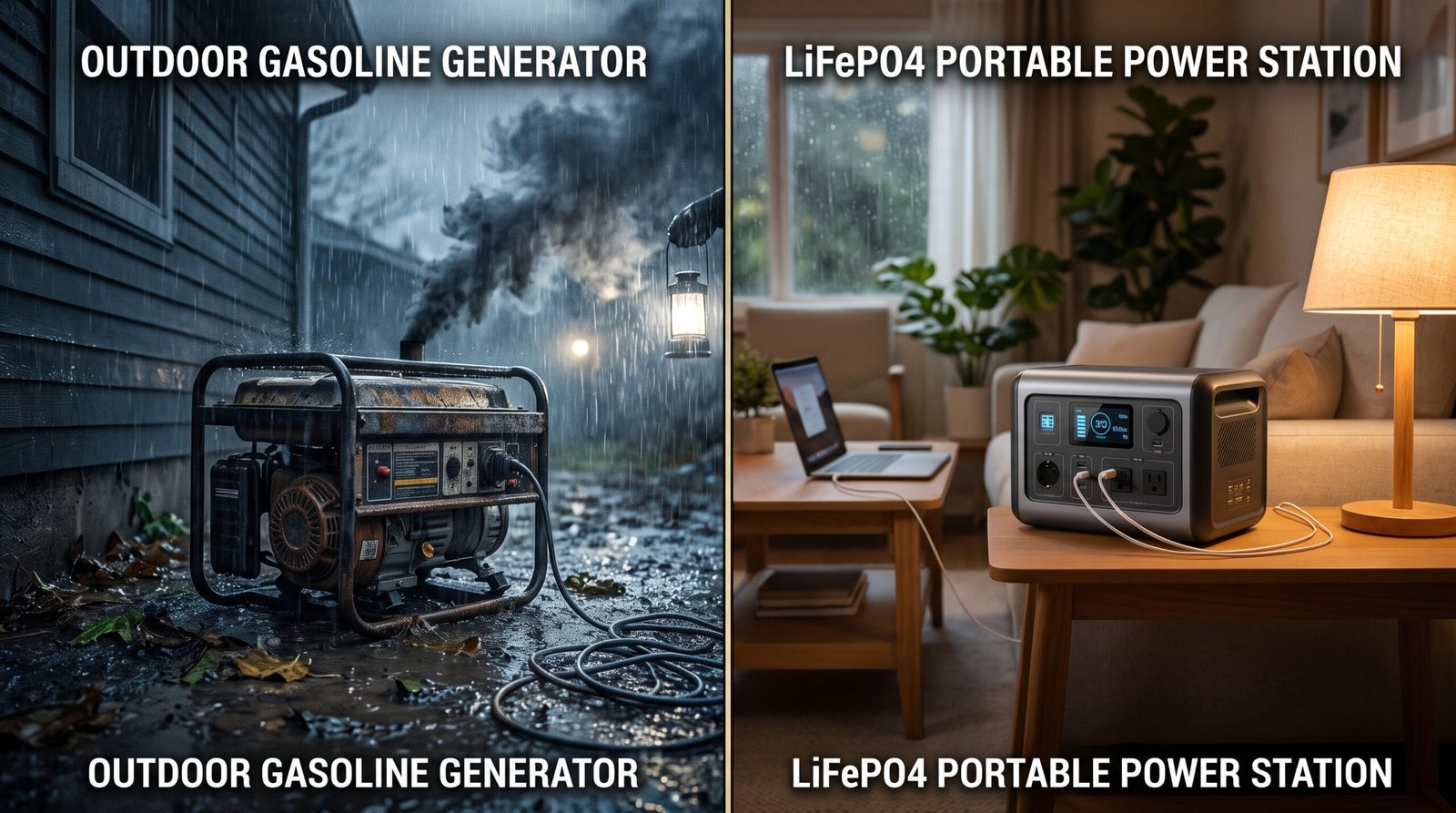
1. What Is an Inverter Generator vs. a Conventional Generator?
Before choosing emergency power for your home or RV, it is critical to understand how electricity is generated and regulated across the three main backup technologies:
- Conventional Portable Generator: Uses a mechanical engine spinning at a fixed 3,600 RPM regardless of load. Its Total Harmonic Distortion (THD) often exceeds 15%–25%, which can overheat sensitive laptop chargers, CPAP machines, and modern inverter refrigerator control boards.
- Gas Inverter Generator: Converts raw AC into DC and inverts it back to clean Pure Sine Wave AC (<3% THD). It throttles engine RPM down during light loads, reducing noise to 52–60 dB. However, it still burns gasoline and is strictly lethal if used indoors.
- LiFePO4 Portable Power Station: Combines automotive-grade Lithium Iron Phosphate cells with a built-in pure sine wave inverter, delivering instant push-button power safely inside your living room or camper van.
2. Head-to-Head Comparison: Conventional vs. Inverter Generator vs. Battery Station
| Feature / Metric | Conventional Gas Generator | Gas Inverter Generator | LiFePO4 Portable Power Station |
|---|---|---|---|
| Indoor & Apartment Safe? | No (Lethal CO Fumes) | No (Outdoor Only) | Yes (100% Zero Emissions) |
| Operating Noise Level | 72 – 85 dB (Loud Lawnmower) | 52 – 62 dB (Normal Conversation) | < 30 dB (Whisper Quiet) |
| Power Quality (THD) | High THD (15%–25%, Risky) | Pure Sine Wave (<3% THD) | Pure Sine Wave (<2% THD) |
| Annual Maintenance | Oil, spark plugs, stabilizer | Carburetor cleaning, oil changes | $0 (Zero Maintenance) |
| Automatic UPS Backup | No (Manual Outdoor Pull) | No (Manual Setup) | Yes (<20ms Auto Switchover) |
3. 5-Year Total Cost of Ownership: Why Battery Backup Saves Money
While a cheap gas generator may cost $500 upfront, fuel costs ($4/gal × 5 gal/day during a 4-day storm = $80/outage) and carburetor repairs add $600 to $900 in hidden expenses over 5 years. When running low-wattage essentials—see our guide on How Many Watts to Run a Refrigerator—a gas unit burns fuel continuously even while your fridge compressor rests. A battery station only draws power on demand.
Upgrade to Silent, Fume-Free Pure Sine Wave Power
Skip the gas cans and deafening noise. Fortune Vast LiFePO4 Portable Power Stations deliver 3,500+ battery life cycles and pure sine wave AC outlets safe for sensitive medical CPAPs and laptops.
Shop Fortune Vast Pure Sine Wave Power Stations →4. When Should You Combine Both? (The Hybrid Strategy)
For multi-week winter blizzards or off-grid homesteads, savvy preppers combine both: use your Fortune Vast battery station indoors 22 hours a day for quiet power, and recharge it rapidly in 1.5 hours via solar panels or a small generator outside at midday.